
Need extra funds at low interest? Why not!
Contact HP Financial

An immediate home repair arose its head or need money for kids to go to college? Unexpected and big payoffs like consolidating a debt can happen to anybody. Home Equity Line of Credit (HELOC) Ontario is the best low-interest option for you in these kinds of situations.
Easy access to funds for big expenditures, home improvements, and unexpected expenses is what a home equity line of credit (HELOC) is all about. Pay interest solely on the amount you actually use when you borrow from your home equity line of credit (HELOC). HPF offers flexible and reasonable financing HELOC options of variable terms ranging from 1 to 3 years that are personalised for every individual.
The home equity line of credit (HELOC) in Canada is a type of revolving credit that lets you borrow money against the equity of your house. It usually has a far more favourable interest rate than other types of lines of credit (like credit cards). Comparing home equity lines of credit (HELOCs) to personal lines of credit reveals that HELOC interest rates are slightly lower. That’s because, should you ever fall behind on your payments, the lender can always liquidate your home.
In addition to your mortgage payments, you will also have to pay interest only on the borrowed amount, which is typically variable-rate and repayable at your convenience.


Home equity is like home value but minus the outstanding mortgage and any other loans secured on it. To grasp a perspective, if your home value is $400,000 and the mortgage balance is $150,000, then the home equity is equal to $250,000. Home equity lines of credit (HELOCs), conventional mortgages, and reverse mortgages are some of the many varieties of home equity loans available.
When borrowing from a federally regulated financial institution, such as a bank, a home equity line of credit (HELOC) in Canada may be limited to 65% of the appraised value of your property. Another option is to combine your home equity line of credit with the amount still owed on your mortgage, increasing the maximum to 80% of your home’s worth.
One mega feature of HELOC in Ontario is that it allows homeowners to borrow funds, of course, up to a pre-approved limit without reapplying for the loan. Most importantly, the interest is only charged on the amount used, making it a flexible financing option.
Additionally, a few more beneficial features of home equity line of credit in Ontario, Canada are:
A HELOC is a practical financial tool for home renovations, debt consolidation, or emergency expenses. However, responsible use is crucial to avoid excessive debt.
Submitting an application with your financial institution is necessary to qualify for a home equity line of credit (HELOC). To determine your eligibility for a home equity line of credit (HELOC) and the amount you can borrow, lenders will usually request to see the following financial documents:
| Home equity | The minimal amount of remaining equity is 20%. |
| Credit score | For the best rates, your credit score should be 740 or above; if it's below 650, you may not be eligible at all. |
| Debt to income ratio | Between 40% to 50%, depending on the organization |
| Proof of income | Provide documentation such as a T4 or pay stub to demonstrate your ability to pay the monthly amount. |
| Mortgage details | All the essential information about the mortgage, such as the amount, duration, and amortization schedule |
Traditional lenders typically favour applicants with credit scores of 660 or higher. However, at HP Financial Services, we have connections with bad credit mortgage loan lenders in Ontario who will look at scores as low as 500 or even lower in certain instances. Remember, home equity plays a significant role in getting this mortgage.
You must also pass a stress test, like for a mortgage. You’ll be stress-tested at the OSFI qualifying rate of 5.25% or your contract rate + 2%, whichever is higher. HELOC qualifications in Canada differ from lender to lender; however, they can be added to your mortgage or used alone.
Home equity is a crucial HELOC qualification criterion that affects the line of credit amount. Your debt-to-income ratio is another HELOC qualification because lenders want to know if you can pay off the line of credit and pay interest.
All these criteria and documentation can make the acquisition of HELOC in Ontario slightly confusing and lengthy. To make it smooth, you need the best home equity line of credit broker like Haris Paracha, the HP in HP Financial Services.

Mortgages are another kind of secured loan. One thing that sets a mortgage apart from a HELOC is that you can’t borrow money again with a mortgage. You are required to refinance in order to withdraw the funds from a mortgage after making a principal payment. Additionally, that may be both troublesome and costly.
There are a number of ways in which poor credit could impact your mortgage application:
As a defence mechanism, lenders will charge higher interest rates to borrowers with poor credit.
A greater down payment—often 20% or more—may be required for bad credit mortgages.
Options are restricted because numerous conventional banks and credit unions have stringent credit score requirements.
Mortgage default insurance is required if the down payment is lower than 20%. This insurance could be more challenging or costly if you have bad credit.
You can borrow up to 65% of your home’s value with a Home Equity Line of Credit (HELOC) in Ontario.
Home equity is the difference between your home’s value and what you still owe on your mortgage.
Example:
Your lender will determine your home’s value using one of the following:
You can negotiate your HELOC credit limit with your lender. Some lenders may offer a higher limit than you need, which could lead to overspending. You can ask for a lower credit limit to stay within your budget and avoid unnecessary debt.
| Benefits | Disadvantages | Risks Involved |
|---|---|---|
| 1. Flexible Borrowing & Repayment – Borrow as much or as little as you need, repay anytime, and re-borrow up to your limit without reapplying. | 1. A home equity line of credit (HELOC) usually has a higher interest rate than a mortgage. | 1. It might be hard to pay back your HELOC if interest rates go up, especially if you take out a lot of money of it. |
| 2. Interest-Only Payments – You only pay interest on the amount you use. If you have no balance, you pay no interest. | 2. Compared to a standard second mortgage loan, the application process for a home equity line of credit is more complex and time-consuming. | 2. Loss of home ownership is a real possibility if you fail to repay your home equity line of credit. |
| 3. Lower Interest Rates – HELOC rates are typically lower than credit cards and other high-interest loans. | 3. It lowers your home's equity, which could: a. Impact your capacity to pay for essentials. b. Restrict your potential home-selling opportunities in the future |
|
| 4. No Prepayment Penalties – Most HELOCs allow you to repay and close the account anytime without extra fees. | 4. You could be tempted to take on more debt than you can afford to repay due to the easy availability of finances. | |
| 5. Convenient Access – Withdraw funds anytime, often through online banking, phone, or even a line of credit card with the same interest rate. | 5. You will not be able to repay your debt if you solely pay the interest. |
Before you take out a home equity line of credit, you should make sure that you have a repayment plan and that you have considered the dangers involved.
A HELOC is home-secured revolving debt. The interest on your loan can be paid off with a minimal monthly payment. Extra payments to the principal are needed to pay down the balance. Unlike other loans, HELOCs rarely include pre-payment penalties. You can pay off as much as you want beyond your interest, allowing you to eliminate your debt faster.
Sure, under certain circumstances. You can apply for a higher home equity line of credit. You would need to reapply, and your salary, home equity, debt service ratios, and credit score would all matter.
Yes, you can use HELOC funds to pay your mortgage. This lets you substitute your mortgage with a HELOC. That may make sense if you’ll pay it off in less than 6-12 months.
There are various ways a HELOC can affect your mortgage. HELOC loans raise your debt-to-income ratio, which may be a factor during mortgage renewal or refinancing.
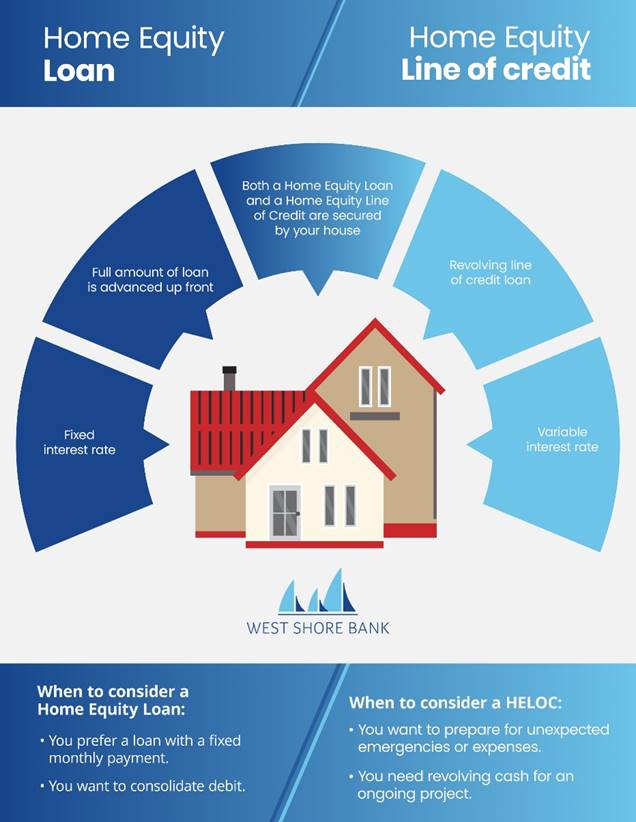
A HELOC is a revolving credit line where you borrow as needed and pay interest only on the used amount. A home equity loan provides a lump sum with fixed payments and interest, making it better for large, one-time expenses.
B. License : 10428
Contact Info:
External Links